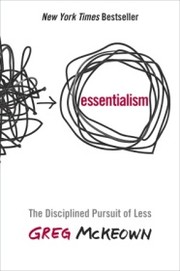
 Essentialism
Essentialism
McKeown makes the case for the disciplined pursuit of less but better. An essentialist doesn't ask how to fit everything in, but rather which few things truly matter — and then channels energy there, treating almost everything else as noise. The book is a system for distinguishing the vital few from the trivial many, learning to say no gracefully, and designing a life around your highest contribution rather than other people's agendas.
- Less but better
- If it isn't a clear yes, it's a no
- Saying no protects your priorities
The 3 big ideas from Essentialism
Less but better
Doing more of everything spreads you thin and produces mediocre results. Concentrating on the few things that matter most lets you make your highest contribution.
If it isn't a clear yes, it's a no
McKeown suggests a high bar: unless an opportunity is an obvious, enthusiastic yes, decline it. This protects your time and energy from a thousand 'good' distractions.
Saying no protects your priorities
Every yes to a non-essential is a no to something essential. Learning to say no gracefully — and accepting brief social discomfort — is core to the essentialist life.
Read the ideas free
FAQ
What is the main idea of Essentialism?
That you should pursue 'less but better' — identifying the vital few things that matter most and eliminating the rest, rather than trying to do everything and being stretched thin.
Is Essentialism worth reading?
Yes if you feel overcommitted, busy-but-unproductive, or pulled in too many directions. It's a clear, motivating framework for focusing on what truly counts.
How is Essentialism different from minimalism?
Minimalism is mostly about owning fewer things; essentialism is about doing fewer things, better. It's a decision-making discipline for time, energy, and priorities rather than possessions.