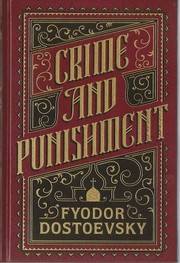
 Crime and Punishment
Crime and Punishment
Dostoevsky's psychological novel follows Raskolnikov, an impoverished former student in St. Petersburg who murders a pawnbroker to test his theory that an 'extraordinary' person is permitted to transgress ordinary morality for a greater purpose. The real punishment isn't legal but internal: guilt, isolation, and feverish torment. Through suffering and the influence of the devout Sonya, the novel moves toward conscience, confession, and the possibility of redemption.
- Conscience punishes before the law does
- The 'extraordinary man' theory collapses
- Redemption comes through suffering and love
The 3 big ideas from Crime and Punishment
Conscience punishes before the law does
Raskolnikov escapes detection but not himself; the guilt and dread that follow the crime are far worse than any sentence. Dostoevsky shows morality as something lived from the inside, not just enforced from outside.
The 'extraordinary man' theory collapses
Raskolnikov reasons that great figures may break moral rules for a higher end. The novel dismantles this: the murder doesn't prove his superiority, it shatters him.
Redemption comes through suffering and love
Sonya's compassion and faith offer Raskolnikov a path back. Dostoevsky suggests that owning one's guilt and accepting suffering can be the beginning of renewal rather than mere despair.
FAQ
What is Crime and Punishment about?
A poor young man murders a pawnbroker believing extraordinary people may transgress morality, then is consumed by guilt. It's a psychological study of conscience, isolation, and redemption in 19th-century St. Petersburg.
Is Crime and Punishment hard to read?
It's long and intense but genuinely gripping — closer to a psychological thriller than a dry classic. A good modern translation (such as Pevear and Volokhonsky) makes it very readable.
Why is Crime and Punishment considered a classic?
It's one of the most influential explorations of guilt, free will, and morality ever written, anticipating modern psychology. Dostoevsky, who once faced a mock execution, writes about conscience with rare depth.