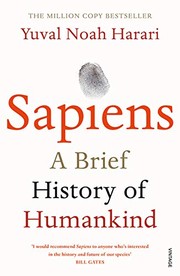
 Sapiens
Sapiens
Harari tells the sweeping story of how Homo sapiens went from an unremarkable animal to the ruler of the planet. His central argument is that our power comes from the ability to cooperate flexibly in large numbers by believing in shared fictions — money, nations, religions, corporations, human rights — that exist only in our collective imagination. He traces three revolutions: cognitive, agricultural, and scientific, questioning whether progress has made us happier.
- Shared fictions enable mass cooperation
- The Agricultural Revolution was a mixed blessing
- More power hasn't clearly meant more happiness
The 3 big ideas from Sapiens
Shared fictions enable mass cooperation
Money, nations, gods, and companies are stories we collectively believe. These shared myths let millions of strangers cooperate, which is the real source of human power.
The Agricultural Revolution was a mixed blessing
Farming let populations grow but, Harari argues, often meant harder, less varied lives for individuals. He provocatively calls wheat's domestication of humans 'history's biggest fraud.'
More power hasn't clearly meant more happiness
Despite enormous gains in knowledge and control, Harari questions whether modern humans are actually happier than their ancestors. Progress and well-being don't automatically align.
Read the ideas free
FAQ
What is Sapiens about?
A brief history of humankind — how Homo sapiens came to dominate Earth through shared fictions that enable large-scale cooperation, traced across the cognitive, agricultural, and scientific revolutions.
Is Sapiens worth reading?
Yes — it's a hugely popular, thought-provoking big-picture history. Read it as a bold synthesis and interpretation rather than uncontested fact, since some claims are debated by specialists.
Who should read Sapiens?
Anyone who wants a sweeping, accessible overview of human history and a fresh lens on money, religion, nations, and progress. It's a strong gateway to big-idea nonfiction.