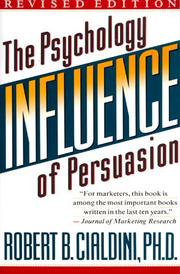
 Influence
Affiliate links: Sticky Idea may earn a commission, at no extra cost to you.
Cialdini, a social psychologist, distills decades of research into six universal principles of persuasion that quietly drive our 'yes': reciprocity, commitment and consistency, social proof, authority, liking, and scarcity. He shows how compliance professionals — salespeople, marketers, fundraisers — exploit these shortcuts, and how understanding them lets you both persuade ethically and defend yourself against manipulation.
- Six principles drive persuasion
- Reciprocity creates obligation
- Social proof guides uncertain choices
Is it worth reading?Yes — it's a foundational, highly readable classic on persuasion, valuable both for marketers and for anyone who wants to resist manipulation. It remains widely cited decades later.
The 3 big ideas from Influence
Six principles drive persuasion
Reciprocity, commitment/consistency, social proof, authority, liking, and scarcity reliably increase compliance. Most influence attempts lean on one or more of these levers.
Reciprocity creates obligation
When someone gives us something — even unsolicited — we feel pressure to give back. Free samples and small favors trigger outsized returns precisely because of this rule.
Social proof guides uncertain choices
When unsure, people copy what similar others are doing. 'Most popular' labels and crowds work because we treat others' behavior as evidence of the right action.
Read the ideas free
See the ideas in real life
Put Influence to work
FAQ
What are the principles in Influence?
Six: reciprocity, commitment and consistency, social proof, authority, liking, and scarcity. Cialdini later added a seventh, unity, in a related updated edition.
Is Influence worth reading?
Yes — it's a foundational, highly readable classic on persuasion, valuable both for marketers and for anyone who wants to resist manipulation. It remains widely cited decades later.
Who should read Influence?
Marketers, salespeople, negotiators, and consumers alike. Reading it is partly self-defense: once you can name the six principles, you stop falling for them unconsciously.
More like Influence
 The Psychology of Money
 Start With Why
 Sapiens
 Antifragile
Did you find what you were looking for?
Not quite? Tap what was off:
Thank you. We read every answer, and pages get fixed from what readers tell us.