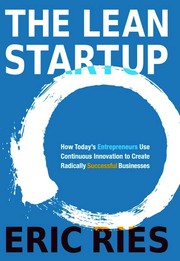
 The Lean Startup
Affiliate links: Sticky Idea may earn a commission, at no extra cost to you.
Ries offers a scientific approach to building startups under extreme uncertainty. Instead of months of planning, founders should test their riskiest assumptions quickly with a minimum viable product, measure real customer behavior, and learn whether to persevere or pivot. The build-measure-learn loop, validated learning, and small batch sizes help teams avoid building things nobody wants and reach product-market fit faster with less waste.
- Build-measure-learn
- Ship a minimum viable product
- Persevere or pivot
Is it worth reading?Yes if you're building a product or company under uncertainty. Its vocabulary — MVP, pivot, validated learning — became standard in startups for good reason.
The 3 big ideas from The Lean Startup
Build-measure-learn
Turn ideas into a small product, measure how customers actually behave, and learn from the data. Speeding up this loop is the core engine of a lean startup.
Ship a minimum viable product
Release the smallest version that lets you test your key assumptions with real users. The goal is validated learning, not a polished launch.
Persevere or pivot
Use evidence, not ego, to decide whether to keep refining your current approach or make a structured change in strategy. Pivoting early saves enormous waste.
Read the ideas free
See the ideas in real life
Put The Lean Startup to work
FAQ
What is the main idea of The Lean Startup?
That startups should treat ideas as hypotheses, test them quickly with minimum viable products, measure real customer behavior, and pivot or persevere based on validated learning rather than guesswork.
Is The Lean Startup worth reading?
Yes if you're building a product or company under uncertainty. Its vocabulary — MVP, pivot, validated learning — became standard in startups for good reason.
Who should read The Lean Startup?
Founders, product managers, and intrapreneurs launching new products. It's most useful when you face high uncertainty about what customers actually want.
More like The Lean Startup
 Antifragile
 Atomic Habits
 Crime and Punishment
 Daring Greatly
Did you find what you were looking for?
Not quite? Tap what was off:
Thank you. We read every answer, and pages get fixed from what readers tell us.