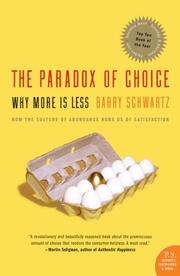
 The Paradox of Choice
Affiliate links: Sticky Idea may earn a commission, at no extra cost to you.
Schwartz challenges the assumption that more choice always makes us better off. Beyond a point, an abundance of options can paralyze us, raise our expectations, and leave us less satisfied and more regretful, even when we choose well. He distinguishes 'maximizers,' who exhaustively seek the best, from 'satisficers,' who pick something good enough — and argues the latter are generally happier. The book offers ways to reduce the burden of too much choice.
- More choice can mean less happiness
- Satisficers beat maximizers
- High expectations breed disappointment
Is it worth reading?Yes if you feel overwhelmed by options or want to understand consumer psychology. The core idea is simple but the practical guidance on choosing well is genuinely useful.
The 3 big ideas from The Paradox of Choice
More choice can mean less happiness
Beyond a certain point, additional options create anxiety, paralysis, and regret rather than freedom. The abundance modern life celebrates can quietly make us miserable.
Satisficers beat maximizers
Maximizers exhaust themselves seeking the absolute best and second-guess their choices; satisficers accept 'good enough.' Satisficers tend to be happier with their decisions.
High expectations breed disappointment
When endless options raise what we expect, even good outcomes feel like letdowns. Lowering expectations and embracing 'good enough' can increase satisfaction.
Read the ideas free
See the ideas in real life
Put The Paradox of Choice to work
FAQ
What is the paradox of choice?
The idea that while some choice is good, too much can be harmful — causing decision paralysis, higher expectations, regret, and lower satisfaction, even when we choose well.
Is The Paradox of Choice worth reading?
Yes if you feel overwhelmed by options or want to understand consumer psychology. The core idea is simple but the practical guidance on choosing well is genuinely useful.
What's the difference between a maximizer and a satisficer?
A maximizer searches for the absolute best option and often regrets the decision; a satisficer chooses the first option that meets their standards and tends to be more content.
More like The Paradox of Choice
 Thinking, Fast and Slow
 Predictably Irrational
 Thinking in Bets
 Antifragile
Did you find what you were looking for?
Not quite? Tap what was off:
Thank you. We read every answer, and pages get fixed from what readers tell us.